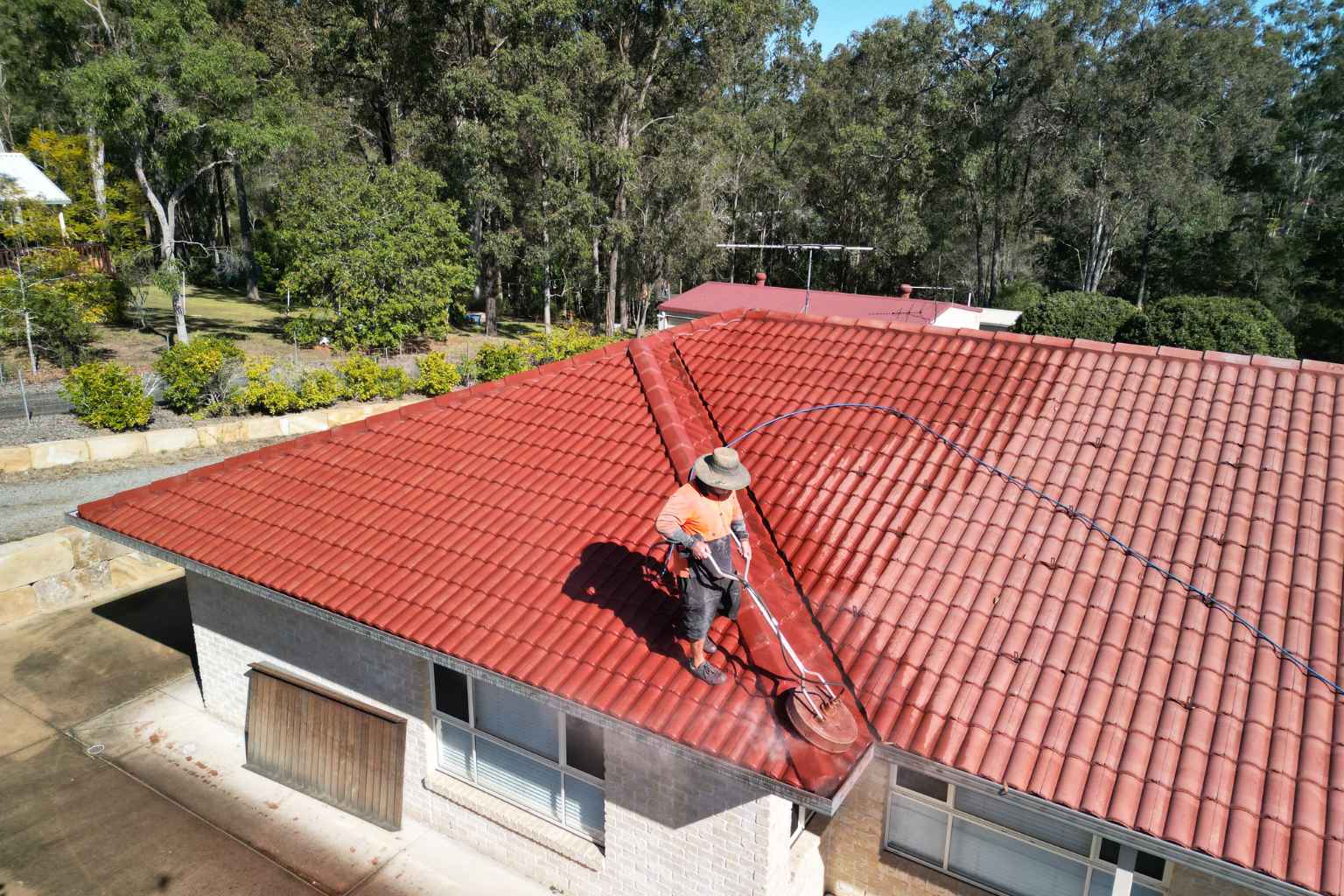
Why Regular Roof Cleaning Matters In Brisbane’s Climate
Brisbane roofs are continually exposed to intense sunlight, humidity, heavy summer rain, airborne dirt and seasonal storms. Over time, these conditions can contribute to the build-up of moss, lichen, algae, leaves and other debris across both tile and metal roofing.
While a dirty roof may initially appear to be a cosmetic issue, accumulated growth and debris can also make it harder to identify cracked tiles, loose ridge capping, corrosion and other developing problems. Leaves collected in roof valleys may interfere with drainage, while organic growth can retain moisture against the roof surface.
Professional roof cleaning in Brisbane helps remove this build-up, improve the appearance of the property and provide a clearer view of the roof’s overall condition. It is also an important preparation stage before many roof restoration and painting projects.
This guide explains what roof cleaning involves, the methods available, the risks of attempting it yourself and how Brisbane homeowners can maintain a cleaner roof over the long term.
What Does Professional Roof Cleaning Involve?
Roof cleaning involves removing dirt, organic growth, stains and debris from the roofing surface using a method suited to the roof material and condition.
Depending on the property, professional roof cleaning may include:
- Inspecting the roof before cleaning begins
- Removing leaves and loose debris
- Clearing debris from roof valleys
- Treating moss, lichen, mould or algae
- Cleaning concrete or terracotta tiles
- Cleaning metal roof sheets
- Washing ridge capping and flashings
- Managing runoff around gutters and downpipes
- Protecting surrounding walls, gardens and outdoor areas
- Checking the roof for visible damage after cleaning
- Removing loose material from the property
The correct process will vary between roofs. A heavily weathered tile roof may require a different approach from a painted metal roof, and fragile or damaged materials should not be treated with excessive pressure.
Learn more about our professional roof cleaning services in Brisbane.
Common Causes Of Dirty Roofs In Brisbane
Roof discolouration can develop for several reasons. The type and severity of the build-up often depend on the property’s location, roof pitch, surrounding vegetation and exposure to sunlight.
Moss And Lichen
Moss and lichen are commonly found on shaded or damp sections of tiled roofs. They may develop more heavily beneath overhanging trees or on sections that receive limited direct sunlight.
Lichen attaches firmly to roofing surfaces and can be difficult to remove without appropriate treatment. Aggressive scraping or excessive pressure may damage older tiles or existing coatings.
Algae And Dark Staining
Algae can appear as dark streaks or patches across the roof surface. It is more likely to develop where moisture remains for extended periods.
Although staining may be primarily visual, it can make the home look poorly maintained and conceal the condition of the roofing material beneath it.
Leaves And Organic Debris
Leaves, twigs, seed pods and other debris may accumulate in:
- Roof valleys
- Behind chimneys
- Around skylights
- Beneath solar panels
- Along roof-to-wall junctions
- Inside gutters and downpipes
Debris can restrict the natural flow of rainwater and may contribute to water backing up beneath tiles or around vulnerable roof sections.
Dirt And Airborne Contaminants
Dust, traffic pollution, bird droppings and other airborne contaminants gradually settle on the roof.
Properties close to busy roads, construction activity or large trees may experience more visible build-up than homes in open locations.
Previous Coating Deterioration
An older painted roof may appear dirty when the real issue is a faded, chalking or deteriorated coating.
Cleaning can remove surface contamination, but it cannot restore a coating that has reached the end of its serviceable life. Further preparation and recoating may be required.
Signs Your Roof May Need Cleaning
A roof does not need to be completely covered in moss before cleaning should be considered.
Common signs include:
- Dark streaks or discoloured areas
- Visible moss or lichen
- Leaves collected in valleys
- Heavy dirt across tiles or metal sheets
- Uneven roof colour
- Organic growth around ridge capping
- Blocked drainage points
- Stains beneath overhanging trees
- A generally faded or neglected appearance
- Difficulty identifying the original roof colour
- Preparation being required before roof painting
Homeowners should assess the roof from ground level rather than climbing onto it. A professional inspection can determine whether the roof is suitable for cleaning and whether repairs should be completed first.
Tile Roof Cleaning In Brisbane
Concrete and terracotta tile roofs are common throughout Brisbane, but they should not automatically be cleaned in the same way.
Concrete Roof Tiles
Concrete tiles can accumulate dirt, moss, lichen and faded coating over time. Suitable concrete tile roofs may be cleaned using controlled pressure, provided the operator understands how to avoid damaging the tiles or forcing water beneath them.
Before cleaning, the contractor should look for:
- Cracked or broken tiles
- Loose ridge capping
- Deteriorated pointing
- Damaged flashings
- Fragile or heavily weathered tiles
- Previous coating failure
- Areas where water could enter the roof cavity
Cleaning may reveal the true condition of an older tile roof and show whether repairs or restoration should follow.
Terracotta Roof Tiles
Terracotta tiles can require a more cautious approach. Their condition, finish and age should be considered before selecting a cleaning method.
Excessive pressure or inappropriate chemicals may affect fragile tiles or existing surface finishes. In some cases, lower-pressure cleaning or specialist treatment may be more appropriate.
Not every terracotta roof should be painted or coated after cleaning. The suitability of further work should be determined through a proper assessment.
Metal Roof Cleaning In Brisbane
Metal roofs can collect dirt, mould, bird droppings and environmental contaminants, particularly around sheet overlaps, flashings and roof penetrations.
Cleaning a metal roof may help improve its appearance and prepare it for repairs or repainting. However, the roof should first be assessed for:
- Rust and corrosion
- Loose screws
- Failed washers
- Damaged metal sheets
- Deteriorated sealants
- Previous coating failure
- Loose flashings
- Areas where water collects
Cleaning does not repair rusted sheets or failed fixings. These issues should be addressed separately before any protective coating is applied.
Painted metal roofs also require compatible cleaning methods. Harsh products or excessive pressure can damage a serviceable coating and create additional preparation work.
Roof Cleaning Methods Explained
There is no single cleaning method that is suitable for every roof. The safest and most effective option depends on the roofing material, existing condition and type of contamination.
Pressure Cleaning
Pressure cleaning uses water delivered at controlled pressure to remove dirt, loose material and organic growth.
It is commonly used on suitable concrete tile roofs during restoration preparation. When performed correctly, it can provide a thorough and consistent clean.
However, pressure cleaning can cause problems when the equipment is used incorrectly. Excessive pressure may:
- Damage fragile tiles
- Remove serviceable coatings
- Force water beneath roofing materials
- Disturb loose ridge capping
- Spread debris around the property
- Damage seals around penetrations
- Create leaks where the roof is already deteriorated
The pressure, nozzle, working distance and direction of cleaning should be adjusted for the roof being treated.
Soft Washing
Soft washing uses lower water pressure combined with a suitable cleaning treatment to loosen or kill organic growth.
It may be appropriate for roofs where high pressure could damage the surface or existing finish. The exact product and process should be selected carefully to suit the roofing material and surrounding property.
Soft washing may not always produce an instantly uniform result, as some treated organic matter may continue to weather away after the initial service.
Targeted Chemical Treatment
Specialised treatments may be used to address moss, algae or lichen.
Any cleaning product should be compatible with the roofing material and used according to the manufacturer’s instructions. The contractor should also consider:
- Nearby plants and gardens
- Rainwater collection systems
- Gutters and downpipes
- Pools and outdoor areas
- Pets and surrounding occupants
- Runoff management
- Local environmental requirements
Simply applying a strong chemical treatment without proper controls can damage surrounding surfaces or vegetation.
Manual Debris Removal
Leaves, branches and larger debris may need to be removed manually before washing begins.
Manual work is particularly useful around valleys, flashings, gutters, solar panels and other areas where debris has become trapped.
Care must be taken not to crack tiles or damage metal roof coatings while moving across the roof.
Can Roof Cleaning Repair A Leaking Roof?
No. Roof cleaning may expose damage, but it does not repair the source of a leak.
A leaking roof may be caused by:
- Cracked or displaced tiles
- Loose ridge capping
- Failed pointing
- Corroded metal sheets
- Loose roof screws
- Damaged flashings
- Failed seals around penetrations
- Rusted valleys
- Structural movement
Cleaning a damaged roof without first identifying these issues may allow water to enter the roof cavity.
Where a leak or visible damage is present, the roof should be inspected and the required roof repairs in Brisbane completed before or as part of the broader work.
Roof Cleaning Before Roof Restoration
Cleaning is one of the most important preparation stages of a professional roof restoration.
It removes dirt, organic growth, loose coating and surface contaminants that could interfere with repairs, primers, sealers and protective coatings.
A complete restoration may involve:
- Inspecting the roof
- Cleaning the roofing surface
- Replacing broken or damaged materials
- Re-bedding or repointing ridge capping
- Repairing flashings and other vulnerable areas
- Preparing the surface
- Applying compatible primers and coatings
- Completing a final quality inspection
Paint should not simply be applied over a dirty or poorly prepared roof. Without proper cleaning and repairs, the new coating may not bond or perform as intended.
Homeowners considering cleaning as part of a larger project can read more about our complete roof restoration services.
Benefits Of Professional Roof Cleaning
When completed on a suitable roof, professional cleaning can provide several practical benefits.
Improved Appearance
Removing stains, dirt and organic growth can significantly improve the overall appearance of the home.
Because the roof occupies a large visible area, cleaning can make the property look fresher and better maintained.
Clearer Roof Assessment
A clean surface makes it easier to identify cracked tiles, rust, coating failure and other visible deterioration.
This can help homeowners address smaller problems before they develop further.
Better Drainage Around Roof Valleys
Removing leaves and debris helps rainwater move more freely through valleys and drainage areas.
Cleaning the roof surface does not replace proper gutter maintenance, but it can reduce the amount of debris being washed into the drainage system.
Preparation For Repairs And Coatings
Repairs, sealers and roof coatings generally require a clean, properly prepared surface.
Cleaning allows the contractor to work with the actual roofing material rather than coating over grime, moss or loose material.
Improved Kerb Appeal
A clean roof can complement exterior painting, landscaping and other property improvements.
This can be particularly useful when preparing a property for sale, although cleaning should never be used to conceal unresolved roof damage.
Risks Of Neglecting Roof Cleaning
Leaving heavy build-up untreated can contribute to several maintenance concerns.
Hidden Roof Damage
Dirt and organic growth can conceal cracked tiles, corrosion and coating failure.
Problems may remain unnoticed until water enters the home or the deterioration becomes more extensive.
Restricted Drainage
Leaves and debris may collect in valleys and around roof penetrations, interfering with rainwater flow.
During heavy rain, restricted drainage can increase the risk of water moving beneath nearby roofing materials.
Moisture Retention
Moss and accumulated organic material may retain moisture against the roof surface for longer periods.
The effect will depend on the roofing material and condition, but persistent moisture can make existing deterioration harder to manage.
Poor Property Presentation
A stained or heavily overgrown roof can make the entire exterior appear neglected, even when the rest of the property is well maintained.
More Difficult Restoration Preparation
Heavy lichen, failed coatings and long-term contamination may require more extensive preparation before a roof can be repaired or recoated.
DIY Roof Cleaning Versus Professional Cleaning
Attempting to clean a roof yourself may appear to reduce the upfront cost, but it carries substantial safety and property-damage risks.
Risks Of DIY Roof Cleaning
Roof cleaning may involve:
- Working at height
- Slippery wet surfaces
- Fragile roof tiles
- Electrical hazards
- High-pressure equipment
- Chemical treatments
- Unstable ladders
- Steep roof pitches
- Limited fall protection
- Difficult access around solar panels and penetrations
A person using a pressure cleaner without roofing experience may also force water beneath tiles, damage coatings or crack roofing materials while walking across them.
Benefits Of Professional Roof Cleaning
An experienced roofing contractor can assess the roof before cleaning and select a process suited to its material and condition.
Professional services may provide:
- Appropriate access and safety equipment
- Knowledge of tile and metal roofing
- Controlled cleaning pressure
- Suitable cleaning products
- Protection of surrounding property
- Identification of visible damage
- More consistent results
- Advice on repairs or restoration
- Better management of waste and runoff
Homeowners can safely inspect the roof from ground level, but cleaning that requires roof access should generally be left to appropriately trained and equipped professionals.
How Often Should A Brisbane Roof Be Cleaned?
There is no fixed cleaning schedule suitable for every Brisbane home.
The appropriate timing depends on factors such as:
- Roof material
- Roof pitch
- Surrounding trees
- Amount of shade
- Property orientation
- Exposure to traffic and airborne contaminants
- Existing coating condition
- Moss and lichen growth
- Proximity to parks or bushland
- Previous maintenance
- Local rainfall and humidity
A shaded tile roof beneath large trees may require attention more frequently than an open metal roof receiving direct sunlight.
Rather than cleaning automatically according to a fixed calendar, homeowners should monitor the roof’s condition and arrange an assessment when staining, organic growth or debris becomes noticeable.
What Affects Roof Cleaning Costs In Brisbane?
Roof cleaning costs vary because every property presents different access, safety and preparation requirements.
The main pricing factors include:
- Total roof area
- Roof pitch
- Single or double-storey height
- Tile or metal roofing
- Roof condition
- Amount of moss, lichen and dirt
- Access around the property
- Number of valleys and roof sections
- Solar panels, skylights and other obstacles
- Required safety equipment
- Cleaning method
- Treatment products
- Runoff and rainwater tank management
- Repairs required before cleaning
- Whether cleaning forms part of a complete restoration
A straightforward single-storey roof with light surface dirt will generally require less work than a steep, heavily overgrown roof with difficult access.
An on-site inspection allows the contractor to assess the roof and provide a written quote based on the actual work required.
Rainwater Tanks And Roof Cleaning
Homes connected to rainwater tanks require additional planning before roof cleaning begins.
Dirt, organic matter and cleaning products should not be allowed to flow directly into a stored water supply without appropriate management.
Depending on the system and cleaning method, the contractor may recommend:
- Disconnecting or diverting downpipes
- Isolating the tank during cleaning
- Allowing initial runoff to bypass the tank
- Cleaning gutters before reconnection
- Following product-specific safety directions
- Waiting for suitable rainfall before collecting water again
Homeowners should tell the contractor about any rainwater collection system before work is quoted or scheduled.
Protecting Gardens And Outdoor Areas
Roof cleaning can produce substantial runoff containing dirt, organic matter and cleaning residue.
Before work begins, the contractor should consider nearby:
- Gardens and lawns
- Swimming pools
- Outdoor furniture
- Vehicles
- Walls and windows
- Solar equipment
- Air-conditioning units
- Pets
- Neighbouring properties
Loose debris may need to be removed manually, while gardens or other areas may require protection and rinsing.
The site should also be cleaned once the roofing work has been completed.
Choosing A Roof Cleaning Contractor
Before accepting a roof cleaning quote, homeowners should check that the contractor:
- Has experience cleaning the relevant roofing material
- Uses appropriate access and safety systems
- Inspects the roof before starting
- Explains the proposed cleaning method
- Identifies existing damage
- Provides a clear written quote
- Explains how runoff will be managed
- Considers gardens, tanks and surrounding surfaces
- Carries suitable insurance
- Provides reliable contact details
- Has genuine examples of previous work
Be cautious of contractors who recommend one high-pressure method for every roof without assessing its condition.
The lowest quote may also exclude preparation, property protection, debris removal or appropriate safety measures.
Maintaining Your Roof After Cleaning
Several practical steps can help reduce future build-up and protect the roof after cleaning.
Keep Nearby Trees Maintained
Trimming branches away from the roof can reduce leaf accumulation, shading and storm-related damage.
Tree work near buildings or powerlines should be completed by an appropriately qualified professional.
Keep Gutters And Downpipes Clear
Regular gutter maintenance helps rainwater drain away from the roof efficiently.
This is especially important before Brisbane’s wetter summer months and after periods of strong wind.
Check The Roof After Major Storms
From ground level, look for displaced tiles, loose materials, fallen branches or visible damage.
Arrange a professional inspection when damage is suspected.
Address Repairs Promptly
Cleaning may reveal cracked tiles, deteriorated pointing or corrosion. Addressing these issues early can reduce the chance of further water entry.
Limit Unnecessary Roof Access
Frequent foot traffic can crack tiles and damage roof coatings.
Any contractor accessing the roof should use appropriate techniques and take care around fragile materials.
Professional Roof Cleaning Across Brisbane
Roof cleaning can improve the appearance of a property, remove accumulated contaminants and provide a clearer understanding of the roof’s condition. However, the method must be selected carefully to avoid damaging tiles, metal sheets, coatings or surrounding areas.
At Roof Restoration Specialists Brisbane, we assess the roof before cleaning and tailor the process to the roofing material and condition. Where repairs, restoration or repainting are required, we can explain the available options and provide a clear written scope.
Arrange an inspection and quote through our Brisbane roofing contact page.